 News Desk
Abu Dhabi, UAE – Artificial intelligence is already delivering measurable impact across industries, from energy to public services, and the UAE’s next phase of growth will depend on how effectively AI moves from ambition to execution.
With global AI spending projected to reach $2 trillion by 2026 and AI expected to contribute $100 billion to the UAE’s GDP by 2030, the focus has shifted from experimentation to real-world deployment. Against this backdrop, the upcoming Machines Can Think summit will highlight the ideas shaping the next stage of the AI economy.
According to Alexander Khanin, Founder of Machines Can See and Polynome, six core themes will define how organisations translate AI potential into economic and societal value.

National AI fabric as a foundation
AI adoption often stalls when data, compute, governance and talent operate in silos. Khanin points to the need for a “national AI fabric” that integrates infrastructure, regulation and human capability into a unified system. Such coordination enables AI models to scale across sectors while preserving data sovereignty.
The UAE has already demonstrated this approach, including the Ministry of Economy’s full-scale virtual replica of its Abu Dhabi headquarters, where users can interact via avatars and even sign legally binding agreements in real time.
From capability to economic impact
Building data platforms and compute capacity alone does not guarantee value. The UAE has focused on closing the execution gap by embedding AI directly into public-sector workflows and national strategies. Through the Ministry of State for Artificial Intelligence, AI is integrated into government services and public-private partnerships.
Studies show organisations that successfully scale AI can achieve profit growth of up to 40%, underscoring the importance of linking infrastructure investment to measurable outcomes.
Education for an AI-driven workforce
AI adoption is outpacing workforce readiness globally. To address this, the UAE has introduced AI education across all government schools, from kindergarten to Grade 12, treating it as a core competency.
This effort requires collaboration between government, educators and technology providers. Ranked third globally for attracting AI talent, the UAE is aligning education reform with labour market demand to maintain its competitive edge.
Energy transformation powered by AI
AI is reshaping the energy sector through predictive maintenance, reservoir modelling, autonomous operations and emissions tracking. With hundreds of trillions of dollars in energy investment expected over the next 25 years, AI-driven efficiency and resilience are becoming critical.
OPEC forecasts the Middle East will supply nearly 60% of global oil exports by 2050, making AI adoption central to operational digitisation and decarbonisation strategies. Leaders from ADNOC, Saudi Aramco Digital, Shell and SLB are expected to discuss these themes at the summit.
Rethinking AI investment models
As AI becomes more capital-intensive and infrastructure-dependent, traditional unicorn-driven investment models are under pressure. Khanin argues investors must shift from isolated company bets to ecosystem-level strategies that align infrastructure, platforms and applications.
This approach accounts for longer monetisation timelines and reframes success around durable, long-term value rather than rapid exits.
Ethical governance as a competitive advantage
As AI systems scale, governance will determine whether they create value or risk. Fragmented oversight can erode trust and expose security gaps. The UAE has taken a coordinated approach by appointing Chief AI Officers across government entities and embedding accountability into decision-making.
By aligning regulation, talent development and deployment, ethical frameworks can enable AI to scale responsibly while maintaining social and institutional trust.
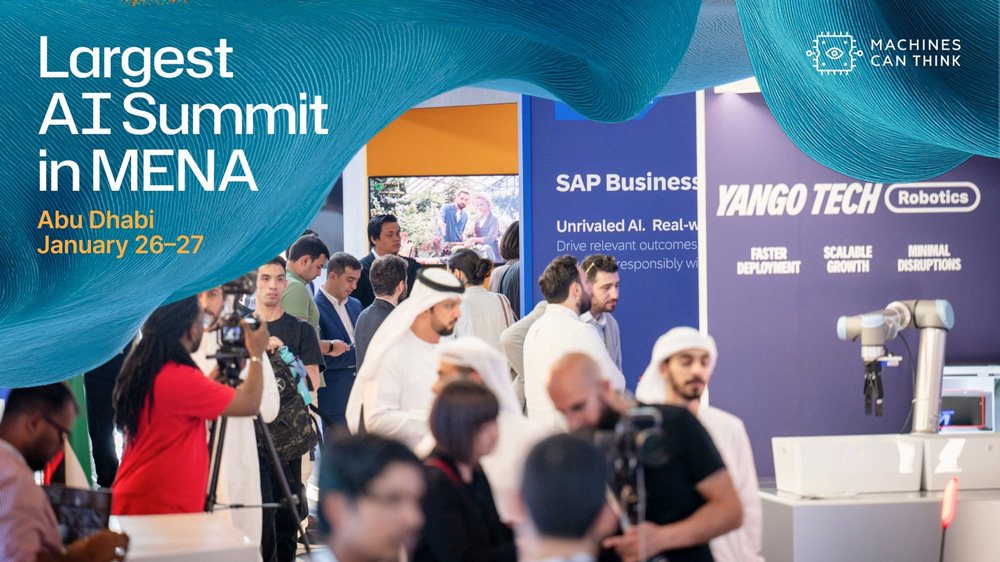
Together, these six themes illustrate how AI ambition can be converted into practical systems with real economic and societal impact. Machines Can Think 2026, taking place on January 26–27 in Abu Dhabi, will bring together global AI and technology leaders for two days of discussions across more than 50 topics focused on real-world AI deployment.