 News Desk
Dubai, UAE – Global investors seeking to multiply their wealth are increasingly turning to the UAE’s real estate sector, where smart, well-advised investments have delivered exceptional returns over the past few years. Market data and investor experiences suggest that property in the UAE has emerged as a powerful wealth-creation asset class, particularly when approached with disciplined strategy and expert guidance.
Following a strong property boom that began in late 2021, residential prices across Dubai surged by 20 to 40 percent, transforming many early buyers into millionaires as property values crossed the US$1 million mark. Demand for ultra-prime real estate has also soared, with record-breaking sales of homes priced above US$10 million, positioning Dubai among the world’s top luxury property markets. Key locations such as Palm Jumeirah, Dubai Marina, and Business Bay continue to attract long-term, lifestyle-driven investors.
Despite global market volatility, UAE real estate remains attractive due to its status as a tangible asset offering rental yields of 7 to 10 percent — among the highest globally. A Dh1 million property can generate annual rental income of Dh60,000 to Dh70,000, while strategic investments, particularly in off-plan or scarcity-driven segments, have the potential to deliver annual capital returns of 30 to 50 percent, according to industry players.
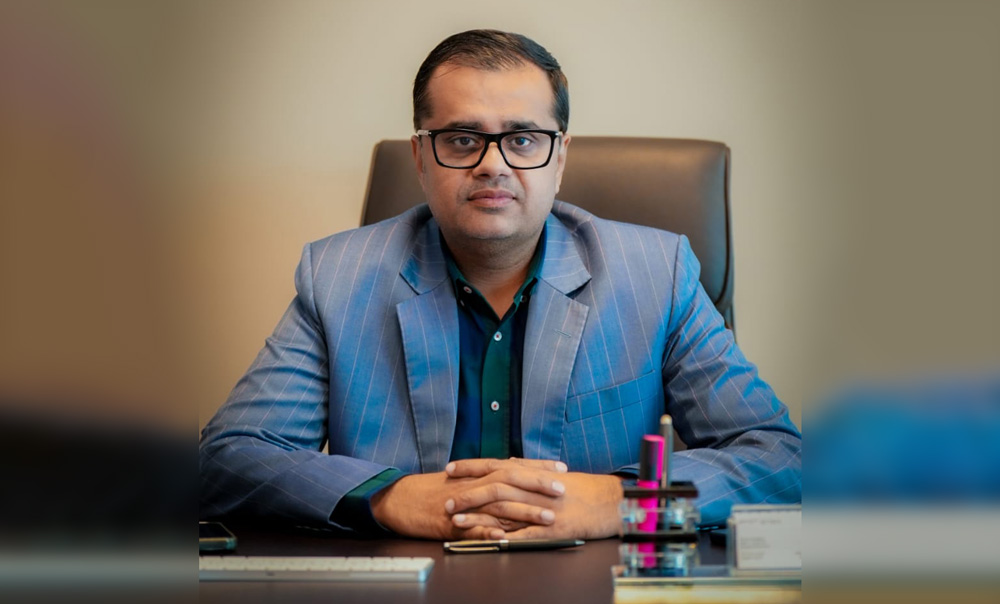
Chirag Goyal, Founder and CEO of GPG Global Real Estate, known in the market as the “Multiplier of Real Estate,” attributes such outcomes to methodical planning rather than chance. “Multiplication is never luck. It is a disciplined formula built on research, scarcity, structured buying, and responsible selling,” he said.
Dubai closed 2025 with property sales reaching a record Dh682.5 billion, marking five consecutive years of growth. “This growth is not random. It is driven by informed investors who understand timing, supply, and long-term value,” Goyal added.
According to Goyal, the cornerstone of successful property investment lies in targeting areas with limited future supply. “Scarcity is the most powerful multiplier in real estate. When supply is capped, value accelerates,” he explained, citing investments in Dubai Maritime City, where his firm acquired small, high-demand retail units at prices about 20 percent below market value.
Similar strategies have been applied in Marjan Island, Ras Al Khaimah, where GPG Global Real Estate invested in sea-view townhouses — an asset class representing just 3 percent of the island’s inventory. Purchased at around Dh6 million, these properties are projected to reach valuations of Dh12 to Dh15 million by 2028, driven by limited supply and rising demand.
Structured payment plans have further amplified returns. In one instance, the firm secured a 20–80 payment plan, requiring only 20 percent upfront and the remaining 80 percent at handover after three years. “If the property appreciates even 10 percent, the return on cash deployed can reach 100 percent,” Goyal said, noting that rental income post-handover often offsets future payments.
Investor case studies highlight these strategies in action. One investor seeking a 20 percent annual return reportedly achieved three consecutive exits within 18 months, each delivering 30 percent returns, nearly doubling the initial capital. Other investors, including industry insiders, have also seen their investments double through similar approaches.
Looking ahead to 2026, experts caution that liquidity tightening and oversupply in certain off-plan segments may pose risks to uninformed investors. However, opportunities remain strong for those who adopt disciplined strategies, focus on near-handover properties, choose reputable developers, and prioritise smaller, more liquid assets.
“My message to new investors is simple,” Goyal said. “Avoid fear of missing out, avoid oversized assets, and avoid developers without proven construction progress. Wealth multiplication happens when you buy right — not when you buy fast — and when you are guided by the right advisor.”