 News Desk
ABU DHABI, UAE – The Special Olympics has issued a stark warning to world leaders, declaring the global shortage of teachers a “critical” emergency that threatens to leave millions of students behind—particularly those with intellectual and developmental disabilities (IDD).
In a powerful global call to action issued today, the organization highlighted new UNESCO estimates indicating the world must recruit 44 million new teachers by 2030 to meet basic education demands. The crisis is most acute in low-income nations, where up to 90 percent of children with disabilities currently remain out of school.
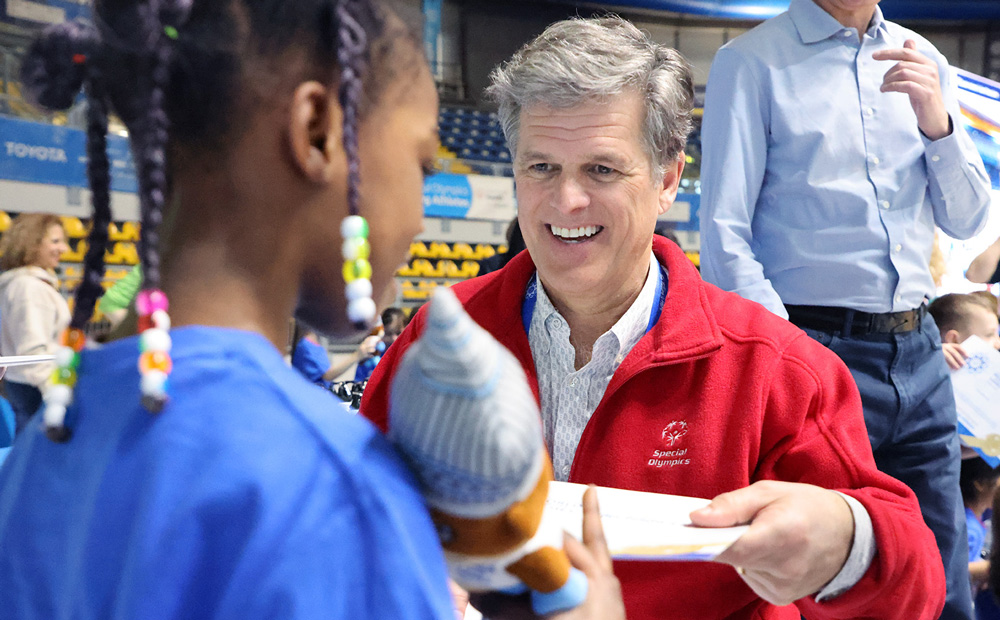
The warning serves as the centerpiece of the 2026 Annual State of Inclusion Letter, titled “The Year of the Teacher: Teaching Inclusion in a Divided World,” released by Special Olympics Chairman Dr. Timothy Shriver.
A Crisis of Belonging
Developed in collaboration with the Abu Dhabi-based Special Olympics Global Center for Inclusion in Education, the letter argues that education systems are buckling under the weight of conflict, displacement, and climate disruption. Dr. Shriver warns that without immediate intervention, students with intellectual disabilities will be the first casualties of this systemic collapse.
“Teachers are the frontline builders of empathy, inclusion, and stability. But their ability to bridge divides and foster belonging is under threat, and they cannot shoulder this responsibility alone,” Dr. Shriver stated.
He emphasized that the current burden on educators is unsustainable, leading to overcrowded classrooms and diminished teaching quality.
“Inclusion must be funded, measured, and maintained with the same urgency as roads, bridges, and health systems,” Shriver urged. “When teachers disappear, opportunity disappears… Without well-prepared teachers, inclusive and equitable education cannot be achieved, and the most marginalized students suffer most.”
Four Pillars for Action
To avert a deeper crisis, Dr. Shriver’s letter outlines four non-negotiable focus areas for governments, foundations, and donors:
- Long-Term Financial Commitment: A shift to minimum 5-year funding cycles with annual increases of 3% indexed to inflation to support teacher recruitment and retention.
- Mandatory Inclusivity Training: By 2028, all teacher licensing programs must embed the Universal Design for Learning (UDL) framework—a model currently being actively piloted by the UAE.
- Teacher Well-being: New policies to elevate the teaching profession, ensuring every educator is “respected, resourced, and retained.”
- School-Based Inclusion: Direct investment in programs like Special Olympics Unified Sports®, which foster peer mentoring and shared leadership between students of all abilities.
UAE Leading the Global Response
The 2026 call to action is deeply anchored in the United Arab Emirates, which has positioned itself as a global hub for inclusive education. The strategy is driven by the Special Olympics Global Center for Inclusion in Education, established in Abu Dhabi through the support of His Highness Sheikh Mohamed bin Zayed Al Nahyan, President of the UAE.
Building on the legacy of the 2019 Special Olympics World Games in Abu Dhabi, the Center is now exporting practical solutions to countries worldwide.
“Schools are places of belonging, and teachers are at the heart of making inclusion real,” said Ahmad Al Gergawi, Director of Communications, Partnership and Outreach at the Global Center.
“The UAE is at the forefront of shaping a new global standard for inclusion, guided by a simple conviction: every child deserves a teacher who sees them, supports them, and expects them to succeed,” Al Gergawi added.
The initiative received a significant boost in 2025 from the Mohamed bin Zayed Foundation for Humanity, which announced a major grant to expand the Global Center’s reach. This funding is set to equip more educators globally with the tools needed to ensure students with and without intellectual disabilities can thrive together.