 News Desk
Stuttgart/Bamberg, Germany: Bosch has taken a major step toward advancing hydrogen technology with the commissioning of its first in-house electrolyzer at the company’s Bamberg site. The system, which features the company’s own Hybrion PEM electrolysis stacks, marks the official launch of a new “hydrogen landscape” designed to showcase Bosch’s solutions across the entire hydrogen value chain.
The 2.5-megawatt electrolyzer, built by FEST in Goslar, Germany, converts water into hydrogen and oxygen using renewable electricity. Meeting the European Union’s criteria for renewable hydrogen, the installation can produce more than one metric ton of hydrogen per day—enough to power a 40-ton fuel-cell electric truck for up to 14,000 kilometers.
“Hydrogen plays a central role in a climate-neutral world, which is something we’re committed to achieving as a society in Germany and Europe,” said Dr. Markus Heyn, member of the Bosch board of management and chairman of the Mobility business sector. “The official start of operations for our electrolyzer and the opening of the hydrogen landscape here in Bamberg mark an important milestone for us.”
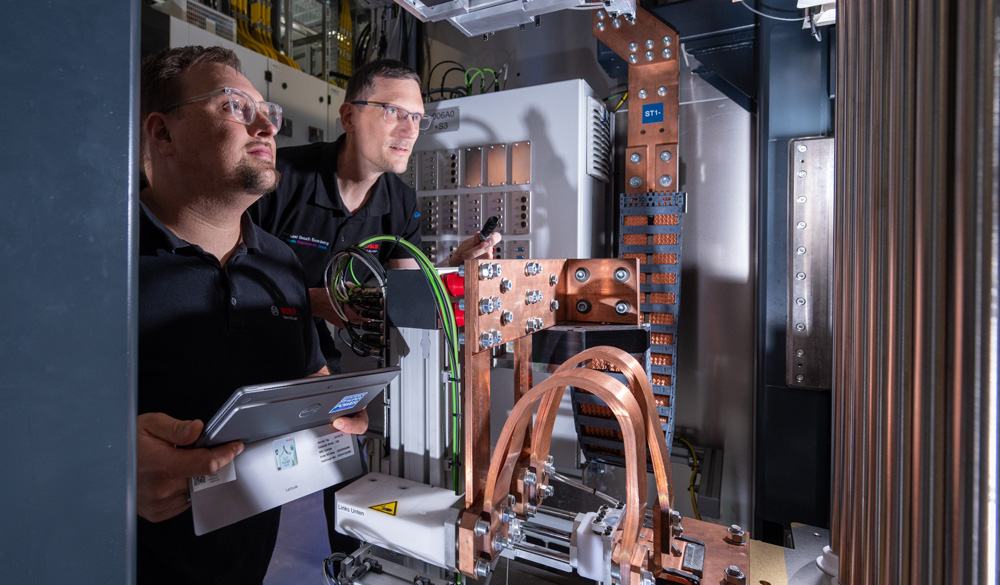
At the heart of the new electrolyzer are two Bosch Hybrion PEM stacks, each rated at 1.25 megawatts and capable of producing around 23 kilograms of hydrogen per hour. These stacks are manufactured at the same Bamberg plant, where Bosch has also established a dedicated test station to ensure performance, efficiency, and reliability before delivery to customers.
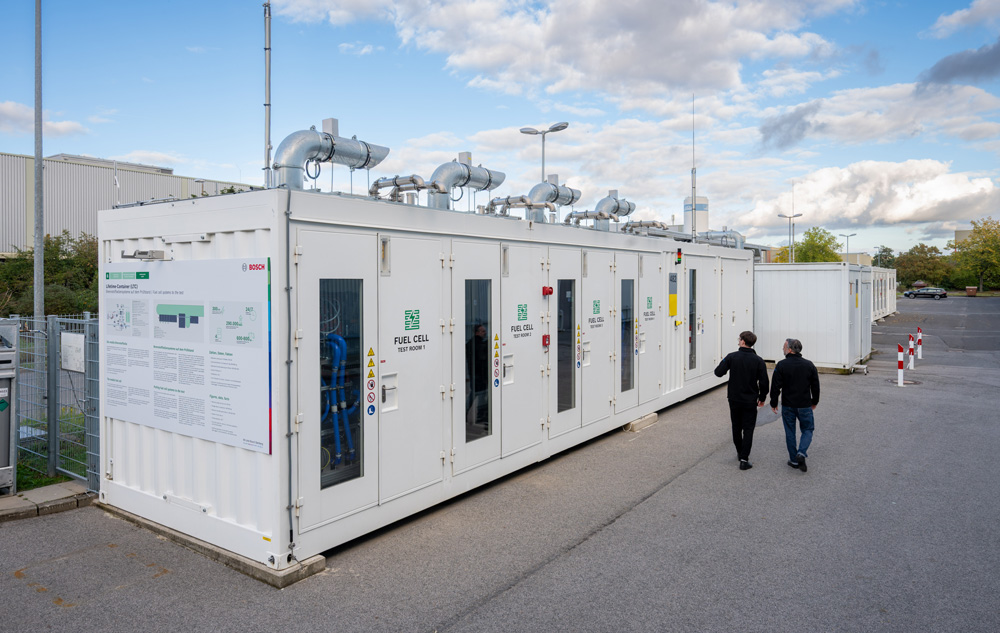
The Bamberg site’s “hydrogen landscape” serves as a live demonstration area, featuring not only production and storage systems but also hydrogen applications. Among them is a Bosch fuel-cell power module (FCPM) housed in a “lifetime container,” where engineers are testing durability and operational stability under real-world conditions. The hydrogen generated by the electrolyzer feeds directly into this container via an internal pipeline network.
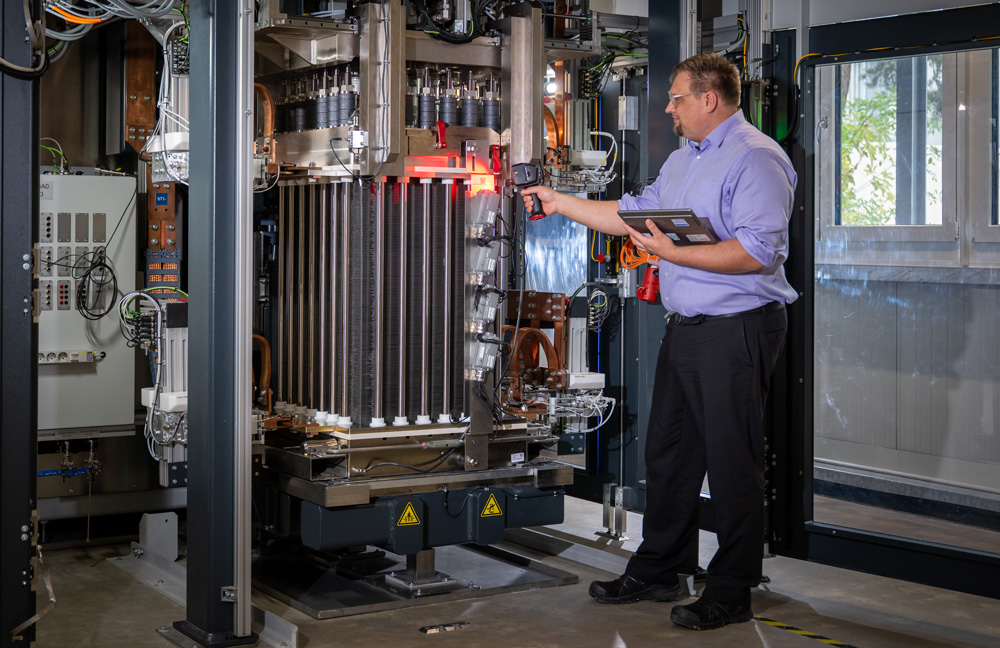
In a closed-loop setup, the FCPM converts hydrogen and oxygen back into electricity—some of which is then used to operate and test the electrolyzer itself. This round-the-clock cycle allows Bosch to study both hydrogen production and fuel-cell operation in continuous interplay.
“Bosch can do hydrogen, and at scale,” said Thomas Pauer, president of the company’s Power Solutions division. “We got involved in the area at an early stage, made upfront investments, and are now offering market-ready technical solutions. The fact that our fuel-cell power module was nominated for the German President’s Future Prize shows we’re at the cutting edge of hydrogen technology.”
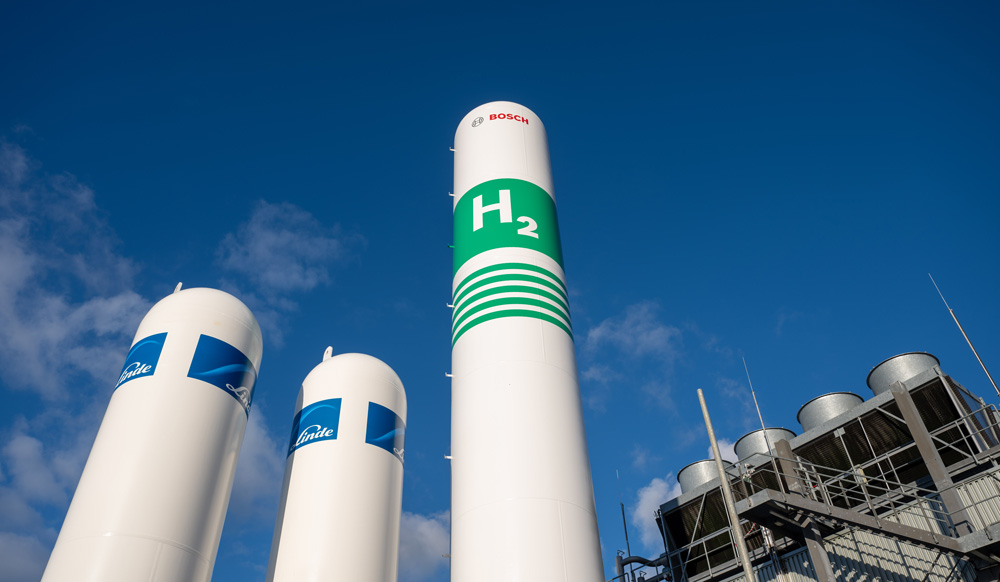
Another striking feature of the Bamberg installation is a 21-meter-high hydrogen storage tank, capable of holding hydrogen produced from electrolysis at up to 50 bar of pressure.
Bosch has already begun deliveries of its Hybrion stacks to several industrial partners, including Kyros Hydrogen Solutions, Neumann & Esser, and Pietro Fiorentini’s subsidiary Hyter. The company says these milestones in 2025 reflect its growing role in the hydrogen economy, with technologies designed to drive Europe’s transition toward cleaner energy systems.