 News Desk
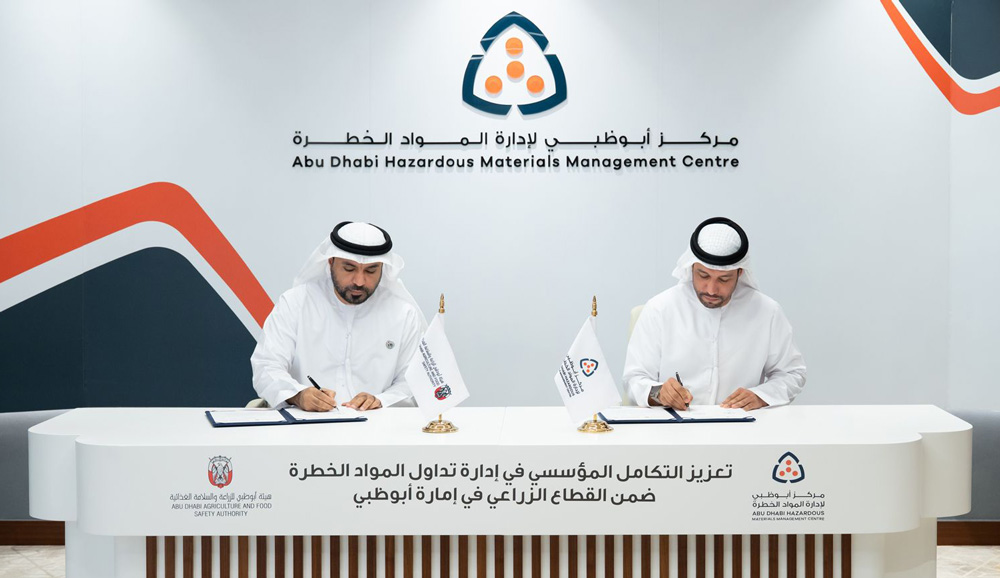
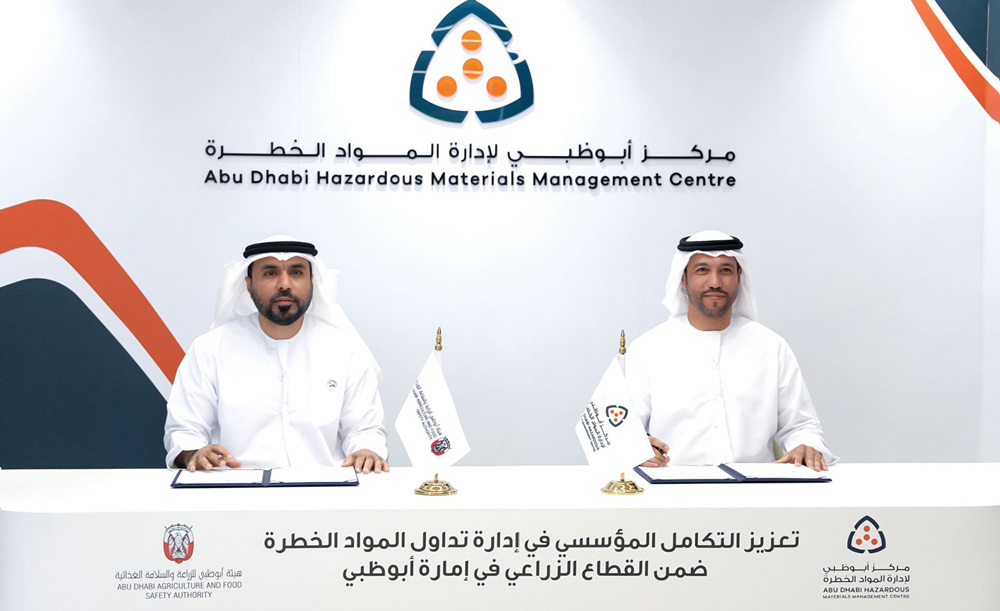
ABU DHABI, UAE – The Abu Dhabi Hazardous Materials Management Centre (AD-HMMC) and the Abu Dhabi Agriculture and Food Safety Authority (ADAFSA) have signed a comprehensive Memorandum of Understanding (MoU) to establish a unified framework for managing hazardous materials within the Emirate’s vital agricultural sector.
The strategic partnership is aimed at ensuring the safe and responsible management of these materials, reinforcing the highest standards of environmental sustainability and public safety across Abu Dhabi. This move aligns closely with the UAE’s national strategies focused on food security, environment, and digital transformation.
Leadership Endorses Collaborative Vision
The agreement was formally signed at the AD-HMMC headquarters by Khalfan Abdullah Al Mansoori, Acting Director General of the Abu Dhabi Hazardous Materials Management Centre, and Dr. Tariq Ahmed Al Ameri, Acting Director General of ADAFSA.
Khalfan Abdullah Al Mansoori highlighted the MoU as a crucial step towards building an integrated system for hazardous materials management. “This MoU contributes to enhancing the business and investment environment in Abu Dhabi by developing a clear and safe hazardous materials management system,” he stated.
Al Mansoori further emphasised the economic benefits, noting that managing these materials in line with international standards will reduce operational risks, boost investor confidence, and improve efficiency across the agriculture, manufacturing, and logistics sectors. This, he added, supports Abu Dhabi’s competitiveness and attracts high-quality investments, ultimately enhancing the contribution of vital sectors to the Emirate’s GDP.
Enhancing Food and Agricultural Safety
Dr. Tariq Ahmed Al Ameri stressed ADAFSA’s commitment to strengthening the food and agricultural safety system. “This cooperation is fully aligned with the Abu Dhabi Government’s vision of achieving environmental sustainability and ensuring community safety,” said Al Ameri.
He elaborated that the partnership will lead to the development of integrated management systems, streamline regulatory procedures, and create a safer operational environment for farmers, livestock breeders, and producers. “This will contribute to improving operational efficiency, enhancing the quality of agricultural and food production, and strengthening its competitiveness in the markets,” he added.
Dr. Al Ameri concluded that the initiative reinforces community and private sector confidence, supporting sustainable development and consolidating the Emirate’s position as a regional leader in food security and environmental safety.
Key Strategic Objectives
The MoU paves the way for several joint initiatives focused on the safe and responsible handling of hazardous materials. Key areas of collaboration include:
- Integrated Digital Systems: Establishing mechanisms for the exchange of technical data and information through fast, direct institutional channels, aligning with the Government’s digital transformation goals to simplify the customer journey.
- Streamlining Services: Developing comprehensive mechanisms to improve services offered to stakeholders and streamline regulatory processes.
- Community Awareness: Launching ongoing campaigns targeting stakeholders, partners, and the general public to strengthen awareness of hazardous materials risks and promote a culture of safety.
- Joint Research and Innovation: Developing and implementing strategic plans and initiatives, including joint research projects, promoting scientific research and investing in quality of life.
The collaborative efforts are designed to ensure the highest standards of well-being for all citizens and residents, contributing to a healthy environment, a strong economy, and a robust legislative framework for sustainable development.