 News Desk
Palma de Mallorca: Mallorca has reinforced its reputation as one of the Mediterranean’s most compelling cultural destinations with a renewed marketing initiative highlighting the island’s rich blend of art, history and nature.
Visitors are invited to discover an immersive journey that spans Miró’s intimate studios, the shaded pergolas and water features of Alfàbia, the circular majesty of Bellver Castle overlooking Palma, and the sensory landscapes of the Sóller Botanical Garden. Together, these sites present Mallorca as a destination where heritage and creativity coexist seamlessly.
At the heart of the campaign is Palma, portrayed as a vibrant tapestry of old and new. The Baluard Museu d’Art Contemporani, dramatically positioned above the city’s Roman walls, anchors the capital’s contemporary art scene. Its collection of more than 700 works by artists such as Joan Miró, Pablo Picasso and Miquel Barceló unfolds against panoramic views of the city and the Mediterranean.
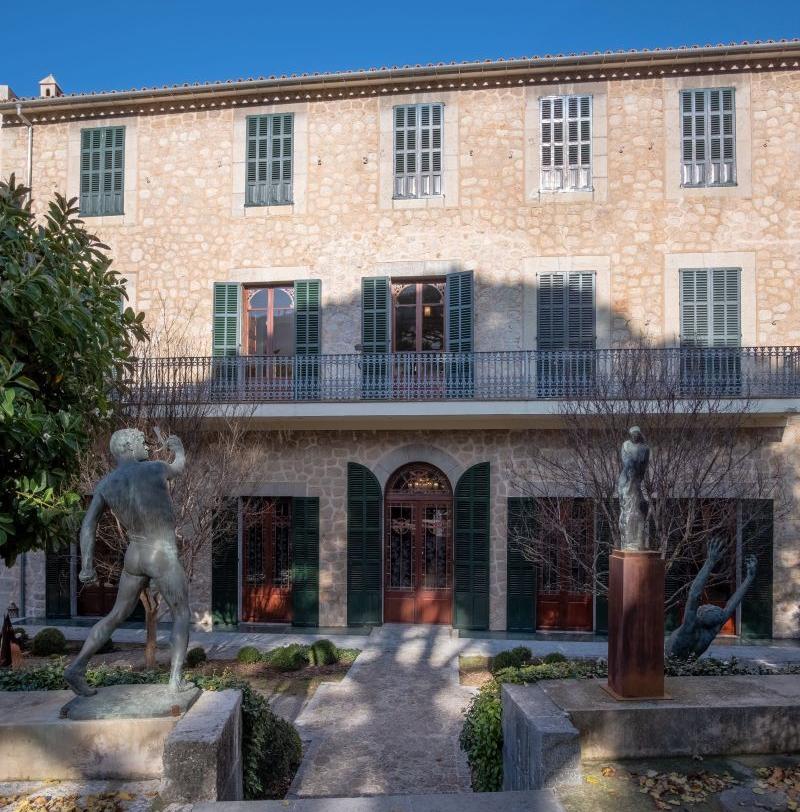
Nearby, the Fundació Pilar i Joan Miró offers insight into the private world of the celebrated artist. Visitors can explore the Sert and Son Boter studios alongside Rafael Moneo’s modernist building, home to more than 6,000 works. Gardens, a library and an active cultural programme have transformed the foundation into a living creative space inspired by Mediterranean light.
The artistic journey continues at the Museu Diocesà de Mallorca, where Gothic altarpieces, religious sculptures and fine goldsmith works trace the island’s artistic evolution from the Middle Ages to the Baroque period within a contemplative historic setting.
Beyond museums, Mallorca’s streets themselves are positioned as cultural stages. Neighbourhoods such as Santa Catalina and Palma’s historic centre are lined with galleries, courtyards and murals, creating an ever-evolving art scene in which classical and contemporary expressions intersect.
Estates, Gardens and Architectural Heritage
On the island’s northern coast, the Sa Bassa Blanca Museum, run by the Yannick and Ben Jakober Foundation, combines art and landscape through its striking sculpture park of monumental granite animals and its underground gallery of Ninschildren’s portraits. The result is an immersive environment where architecture, nature and art merge.
Historic estates further enrich the narrative. Raixa, with its neoclassical design and terraced gardens, offers sweeping mountain views and Mediterranean calm. Alfàbia, an ancient Arab farmhouse, captivates with its shaded pergolas, flowing water features and lush gardens, evoking the atmosphere of a hidden oasis.
In Sóller, Can Prunera stands as a modernist landmark, where stained glass, mosaics and period furniture dialogue with contemporary art. Nearby, the Sóller Botanical Garden safeguards endemic Balearic and Mediterranean species, offering visitors a sensory encounter shaped by colour, texture and fragrance.
An Island of Creative Lives
Mallorca’s cultural identity is further defined by its long-standing appeal to artists and writers. In Valldemossa, the Charterhouse recalls the winter spent by composer Frédéric Chopin and writer George Sand, preserved through manuscripts and personal artefacts. In Deià, the home of poet Robert Graves remains open to visitors, maintaining its intimate atmosphere and commanding views over the Mediterranean.
The island also honours its own literary figures. In Binissalem, the Casa Museu Llorenç Villalonga preserves the legacy of the author of Bearn, while in Santanyí, the Fundació Blai Bonet safeguards the work of the influential poet and novelist for future generations.
Through this renewed focus on its cultural landmarks, historic estates and artistic heritage, Mallorca positions itself as an essential destination for travellers seeking a deeper, more immersive experience of the Mediterranean — one where art, nature and history are woven into everyday life.