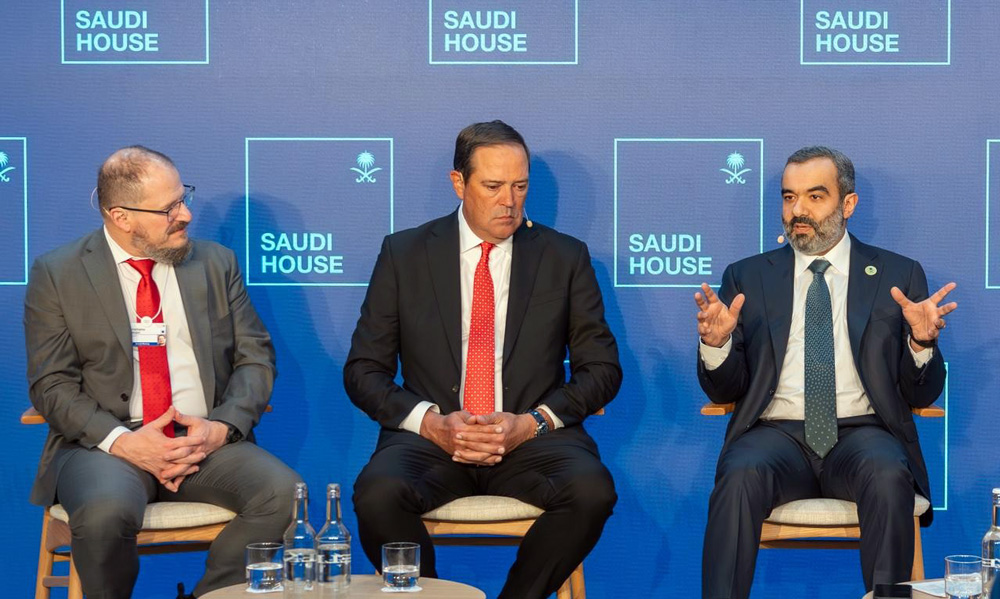
 News Desk
Davos, Switzerland – Saudi Arabia’s delegation to the World Economic Forum (WEF) Annual Meeting 2026 in Davos announced a series of high-profile initiatives aimed at tackling pressing global challenges while advancing the Kingdom’s Vision 2030 objectives.
Reema Bandar Al-Saud, Saudi Arabia’s Ambassador to the United States, revealed that the Kingdom will host the first-ever Global Coral Reef Summit in 2026. The summit will convene global leaders, scientists, and investors to develop science-based solutions, address policy and regulatory gaps, and mobilize sustainable financing to protect and restore coral reef ecosystems worldwide.
Highlighting the role of tourism in fostering global understanding, Ahmed A. Alkhateeb, Minister of Tourism, emphasized tourism’s contribution to peace and social development. “Tourism brings peace at a time when it’s needed – connecting people and encouraging dialogue,” he said, noting its positive impact on youth, women, and communities.
On the Kingdom’s rapid progress in technology and artificial intelligence, Abdullah A. Alswaha, Minister of Communications and Information Technology, underscored the success of Saudi Vision 2030. He noted that non-oil sectors now contribute 56% to GDP, while the national tech workforce has grown significantly, positioning Saudi Arabia as an emerging global AI hub.
Earlier in the day, HUMAIN and the National Infrastructure Fund (Infra) announced a Strategic Financing Framework Agreement of up to $1.2 billion to support AI and digital infrastructure expansion. The agreement includes non-binding financing terms for the development of up to 250 megawatts of hyperscale AI data center capacity across the Kingdom.
In parallel, the UNCCD COP16 Presidency launched the Business4Land (B4L) Champions’ Council, a coalition of CEOs, investors, and policymakers focused on accelerating land restoration, combating land degradation, and strengthening drought resilience through private-sector leadership.
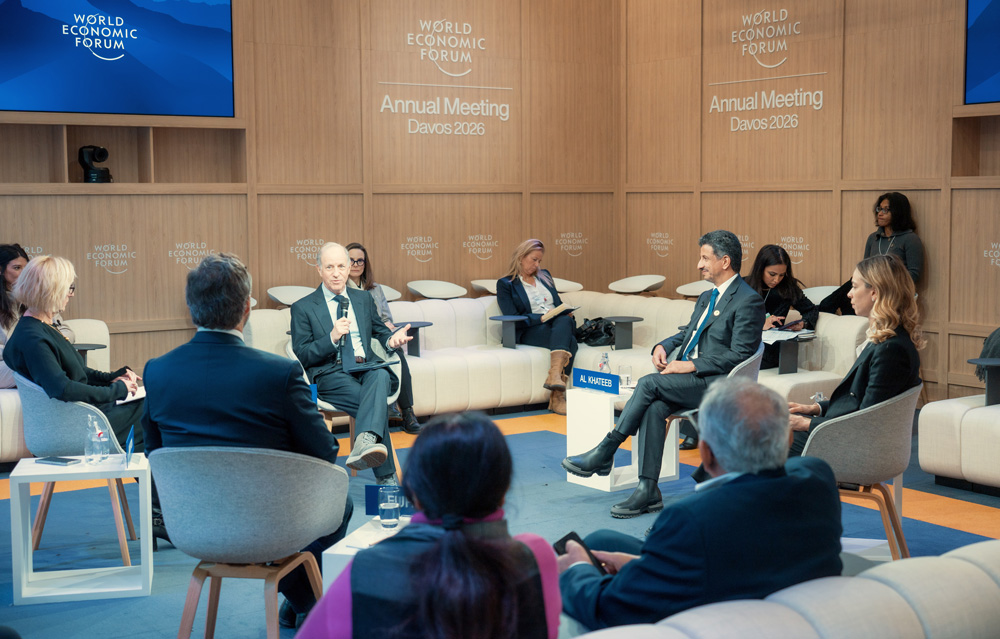
The Ministry of Industry and Mineral Resources (MIM), in collaboration with WEF, also announced the Lighthouse Operating System, a country-level framework designed to fast-track manufacturing transformation. Developed with WEF’s Advanced Manufacturing and Production Centre, the initiative aims to diversify the economy, strengthen non-oil industries, and establish Saudi Arabia as a global hub for advanced manufacturing and logistics.
Additionally, MIM and WEF signed a cooperation agreement, effective until September 2027, to enhance collaboration on critical minerals essential for energy transition and advanced technologies. The initiative will be overseen by a joint executive committee to ensure resilient, sustainable, and responsible mineral supply chains.
Together, the announcements underscored Saudi Arabia’s growing role as a global convener and catalyst for innovation, sustainability, and economic transformation.